Mattress 201 · A beginner’s guide
What to Check When Choosing an Organic Latex Bed
“Organic latex” sounds like a clear promise. But it doesn’t, by itself, tell you how much latex is in a mattress, where it came from, how the bed is built, or whether the feel will suit you. A closer look at materials, certifications, layers and support can help you make a more informed choice—without getting lost in the label.
Shopping for an organic latex bed can feel like comparing two recipes whose labels use the same headline but list very different ingredients. One mattress may use latex in most of its comfort and support layers; another may combine a thinner latex layer with foam, springs or other materials. Covers and internal components can also vary. Those differences affect how a mattress feels, how it may perform over time and what a certification actually applies to.
The good news: you don’t need to become a materials scientist to read a mattress description. Start with a few practical questions. What is in each layer? What does “organic” refer to? How is the bed expected to feel? What foundation does it require? And what care instructions will matter after it arrives? Taken together, the answers offer a much more useful picture than a headline claim alone.
Start with the full materials list
Before considering firmness or price, find the mattress’s complete materials breakdown. Look for a layer-by-layer description rather than a short statement such as “made with organic latex.” A transparent listing may identify the comfort layer, support core, cover, quilting and any additional components. If the available description doesn’t say what makes up the whole bed, ask the maker or retailer for clarification.
Check where latex appears. It may make up the entire core, sit in one or more comfort layers, or be paired with another support system. A bed described as latex can still contain other materials, so the word alone shouldn’t be taken to mean that every part is latex—or organic. The distinction matters if you have specific material preferences, sensitivities or environmental priorities.
Also note the other materials used alongside latex. A mattress may include cotton, wool, natural-fiber padding, a spring unit, adhesives or a synthetic foam component. None of those details automatically determine whether a bed is right or wrong for you. They simply help you understand what you’re considering, and whether the product’s claims match your own priorities.
- Ask what each layer is made of. A useful description identifies materials and, where available, their thickness or position.
- Check whether latex is blended. “Latex” may refer to a natural, synthetic or blended material. Look for explicit wording rather than assumptions.
- Look beyond the comfort layer. The cover, quilting and support core are part of the mattress too.
- Confirm what is not specified. If the description leaves out a component, ask whether it is undisclosed, unavailable or simply not part of the design.
Clear details are especially valuable when comparing two beds that appear similar on a product page. A well-described mattress gives you a basis for comparison; broad language makes it harder to know whether you’re comparing like with like.
Understand what an organic claim covers
“Organic” can describe a particular raw material or a product’s certified components, but it does not necessarily mean every part of the finished mattress carries the same certification. Read the certification information carefully and note its stated scope. Does it apply to the latex? The cotton cover? Wool? A processing standard? A finished product? Those are different claims, and precise wording helps separate them.
Certifications can make a materials claim easier to assess, but they are not interchangeable. Some standards focus on organic agricultural inputs; others address processing, chemical restrictions or environmental and social criteria. A certification logo is most useful when the company names the standard, identifies the material it covers and provides enough detail for you to verify the claim. If you’re unsure, look for the certifier’s explanation of what the standard does—and does not—mean.
For example, a product listing might state that its latex and textile components have separate certifications. That can be useful information, but it doesn’t mean one certification automatically covers the entire mattress. Pay attention to whether claims are specific to an ingredient, a supplier or the finished item.
Keep an eye out for vague terms such as “eco,” “green” or “natural” when they appear without supporting detail. They may be part of a genuine description, but they don’t tell you exactly what a product contains. A named standard and clear explanation are more helpful than a row of symbols without context.
It’s equally reasonable to consider certifications alongside factors they may not answer, such as the feel of the bed, construction quality, care requirements, delivery arrangements and warranty terms. A certification can help with one part of your decision. It cannot determine whether you’ll find a mattress comfortable.
Ask how the latex is constructed
Latex mattresses can differ in how the latex is processed and assembled. Product descriptions may mention methods such as Dunlop or Talalay, or describe one-piece cores and layered constructions. These terms can be useful clues, but they are not comfort ratings. A process name alone does not tell you whether a bed will feel soft, firm, supportive or comfortable for your body.
Focus on practical construction questions: How many latex layers are there? How thick is each one? Are the layers the same firmness or deliberately varied? Can they be rearranged or replaced? Is there another material between the latex and the cover? The answers can help explain how a mattress is intended to respond under pressure and what options you may have if your needs change.
Layer design is one reason two latex beds can feel noticeably different, even if both use similar ingredients. A comfort layer may allow the surface to compress more readily, while a firmer layer below can contribute to deeper support. The interaction between those layers matters more than a single label on its own.
If the bed includes a zippered cover, check whether it is designed to be opened by the owner and whether the internal layers can be changed. Don’t assume a zip means the mattress is adjustable; some covers are removable for manufacturing or service reasons, while others are not intended to be opened at home. Follow the maker’s guidance to avoid damaging the cover or affecting warranty coverage.
Latex is often described as responsive or buoyant. That may be a helpful general impression, but feel depends on the whole construction, including layer thickness, firmness, cover tension and the foundation beneath it. If you can try the mattress in person, give yourself time to notice how it feels in your usual sleeping position rather than judging it from a brief sit at the edge.
Choose firmness by feel, not by a number alone
Firmness labels are useful for narrowing a shortlist, but they aren’t universal measurements. One maker’s “medium” may feel different from another’s, and your experience can depend on your body shape, weight distribution, preferred sleeping position and the bed base. Treat a firmness rating as a starting point—not a guarantee.
Think about the positions you actually sleep in. Side sleepers often pay attention to pressure around the shoulder and hip, while back sleepers may prioritize a comfortable, supported feeling through the torso. Stomach sleepers may have different preferences again. These are general observations, not rules: bodies, sleep habits and comfort expectations vary widely.
If two people share the bed, compare preferences before choosing. One sleeper may prefer a softer surface while the other wants a firmer feel. Ask whether the mattress is offered in different firmnesses on each side, whether separate components are available, and whether the company provides an exchange option. Read the actual terms: a comfort exchange can involve fees, time limits or other conditions.
When trying a mattress, lie down in your normal position and give your body several minutes to settle. Notice whether you feel comfortable and supported, whether pressure builds, and whether movement from another sleeper is distracting. No quick test can predict every night at home, but a deliberate trial is more informative than relying on a number or a slogan.
Don’t overlook the bed base
A mattress doesn’t work in isolation. The foundation can influence how stable and supportive the sleep surface feels, and some latex beds have specific requirements for the base beneath them. Before buying, check whether the manufacturer recommends a platform, slatted foundation, adjustable base or another type of support.
For a slatted foundation, review the maker’s instructions about spacing and construction. Widely spaced, flexible or uneven slats may not be suitable for every mattress. A base that is not compatible could affect comfort and may also matter under the mattress warranty. If you already own a bed frame, check its dimensions and condition rather than assuming it will work because it supported your previous mattress.
Measure the frame, too. Confirm that it matches the mattress size and that the mattress depth will work with your headboard, sheets and bedroom layout. Latex beds can be substantial, so consider how you’ll move the mattress into the room and whether your frame or adjustable base has a weight limit.
For adjustable bases, confirm that the mattress is approved for that use and ask about any limits on flexing. A foundation’s suitability is a practical detail that can be easy to miss while focusing on organic materials, but it is part of choosing a bed that works as a system.
Consider temperature, ventilation and everyday care
Sleep temperature is personal, and mattress materials are only one piece of the picture. A latex bed’s surface feel can be influenced by its cover, quilting and any additional layers, as well as bedroom temperature, bedding and individual comfort. If you tend to sleep warm, look at the entire construction and ask how the maker recommends ventilating and caring for the mattress. Avoid assuming that a particular material guarantees a cool night.
New products may have a noticeable scent when unpacked. Ask the manufacturer what to expect, whether the mattress should be aired before use and what ventilation guidance it provides. Don’t infer a health or safety conclusion from smell alone; instead, consult product documentation and ask specific questions about materials, processing and the company’s recommendations.
Care instructions deserve a close read before the mattress arrives. Some covers are not washable or removable, and certain natural materials should not be exposed to excess moisture. Find out how to spot-clean the surface, whether rotation is recommended, and what to do if there is a spill. A mattress protector can help guard against everyday dirt and moisture, but choose one compatible with the mattress’s fit and care guidance.
For example, the Sleep and Beyond Organic Cotton Waterproof Mattress Protector is described as an organic-cotton surface backed with a waterproof membrane. When considering any protector, check its depth, fit and laundering instructions—and remember that a protective layer may slightly change how a mattress feels. Follow the mattress maker’s care recommendations as well.
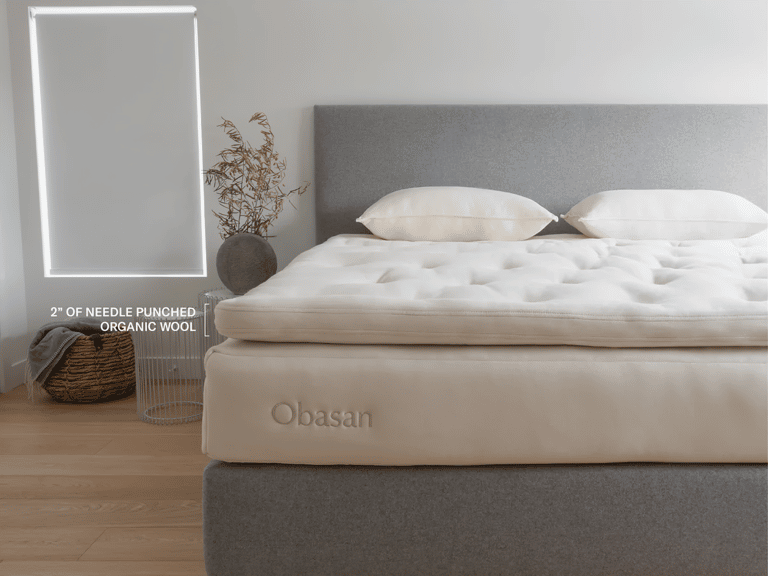
A topper is another way to adjust the surface of an existing mattress, though it is not a substitute for choosing the right support underneath. The Obasan Classic Wool and Latex Mattress Topper, for instance, is described as a 1.5-inch layer combining wool, cotton and latex. Its materials and construction make it relevant as a bedding accessory, but a topper’s effect depends on the mattress below it and your own preferences.
Read the practical terms before checkout
A mattress can look right on paper and still be a difficult purchase if the policies don’t suit your situation. Before ordering, check the trial period, return process, delivery method and warranty. Ask what happens if the bed feels uncomfortable, whether a return pickup is included, and whether the mattress must be kept in a particular condition during the trial.
Warranty language is worth reading closely. A warranty may address manufacturing defects but not normal changes in feel, comfort preferences or damage caused by an unsuitable base. Review its duration, exclusions and any setup requirements. Keep order details and care instructions somewhere accessible in case you need them later.
Also consider practical logistics: delivery access, stairs, packaging, setup, mattress weight and disposal of the old bed. Latex mattresses can be heavy, particularly in larger sizes. Knowing who will carry and position it can prevent a stressful surprise on delivery day.
Price alone doesn’t tell you how long a mattress will last or whether it is a good fit. Compare the materials, construction, support terms, service policies and care requirements alongside the cost. A detailed description may help you understand what you’re paying for; it shouldn’t pressure you to choose a bed that doesn’t meet your comfort needs.
A simple checklist for comparing organic latex beds
When product pages start to blur together, bring the decision back to a short set of questions. You can save the answers in a note and compare them side by side:
- Does the maker list the materials in each layer, including the cover and support core?
- Is the latex identified as natural, synthetic or blended?
- What exactly does each organic or environmental certification cover?
- How many layers are there, and what are their thicknesses and firmness options?
- Can layers be rearranged or replaced, and is the cover meant to be opened?
- What foundation does the manufacturer recommend?
- Does the mattress feel comfortable in your normal sleep position?
- What are the trial, return, warranty, delivery and care terms?
If a retailer cannot answer a basic question, that is information in itself. You do not have to reject a mattress automatically, but you can decide whether the missing detail matters enough to pause, seek clarification or compare another option.
The bottom line: look past the label
An organic latex bed is not one uniform product category. Materials, certifications, layer design, firmness and foundation requirements can vary from one mattress to the next. A careful buyer doesn’t need to chase perfect wording or decode every technical term. The goal is simpler: understand what the bed contains, what the claims mean and whether its construction and feel suit your needs.
Start with the materials list, verify the scope of any certifications and ask how the layers are arranged. Then consider how you sleep, try the mattress if possible, confirm your foundation and read the care and return policies. With those details in hand, “organic latex” becomes more than a phrase on a label—it becomes a clearer, more useful description of the bed you’re choosing.